Revival Inspiration in Contemporary Interior Design
The world of design and decoration is filled with inspiration from various periods, but none has had a greater influence than the Renaissance. As a remarkable rebirth of culture and art, the Renaissance has left an indelible mark on many aspects of society, particularly in interior design.
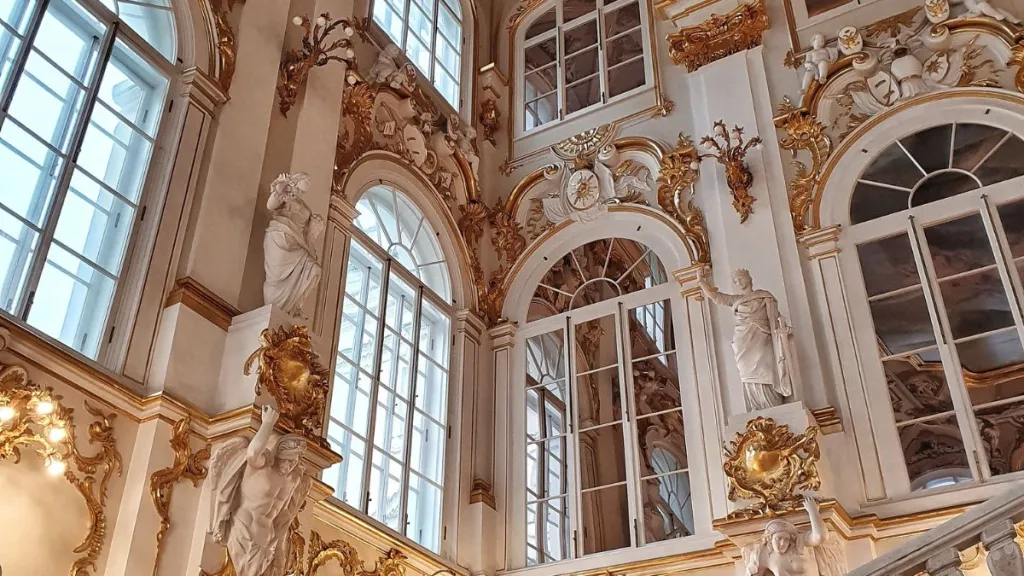
The Renaissance, in Italian, means 'rebirth,' representing the revival and rediscovery of classical Roman and Greek values, honoring human dominance and intellect.
In the contemporary design world, the Renaissance style continues to inspire and have a profound impact. Despite having passed hundreds of years, the elegance and style of the Renaissance remain an endless source of inspiration.
.png)
The Renaissance style, with its intricate and rich detailing, often evokes a sense of beauty and grandeur. However, when applied to contemporary design, retaining all the elaborate details can make the space feel overly heavy and intricate.
Modern life demands flexibility, convenience, and versatility in spaces. Renaissance architecture and design tend to lean towards permanence and ornamentation, lacking the flexibility to adapt to the changing needs and diverse uses of each household.
The advancement of technology and building materials has opened up many opportunities for design and construction. Therefore, instead of applying all the classical decorative elements and patterns, the most essential and distinctive features of the Renaissance can be selected and reinterpreted in a simplified and optimized way.
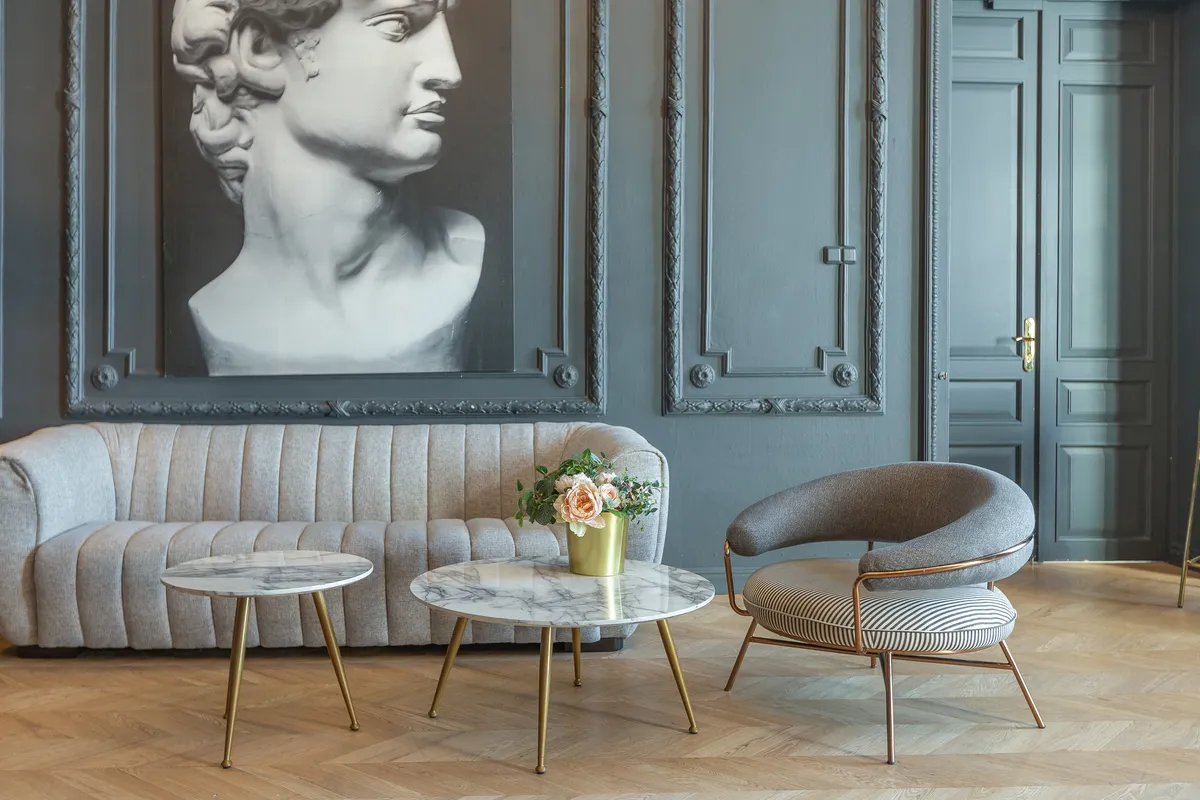
This demonstrates that the combination of tradition and modernity lies not only in faithfully reproducing but also in the flexibility and creativity to adapt and evolve over time.
Inspiration from the Renaissance in contemporary interior design
The limitless creative power inspired by the Renaissance has helped shape spaces like creating a luxurious classical artwork that is also contemporary.
So how does this inspiration create a great contemporary design?
1. Artwork:
Choosing decorative artworks in the space shows respect for the values and evokes memories of a golden age of Renaissance style.
.png)
It's no surprise that this style is closely associated with the most glorious artistic era in history - think of Da Vinci, Michelangelo, Donatello, and Raphael, the magnificent paintings of palaces and cathedrals.
Taking art as its essence and primary inspiration, this involves decorating walls with frescoes, tapestries, or patterned plasterwork. Wood panels with elegant detailing are also popular. Artistic motifs adorn every inch of the interior space, with decorative rugs adding texture and warmth.
2. Using color and woven materials in Renaissance-inspired design.
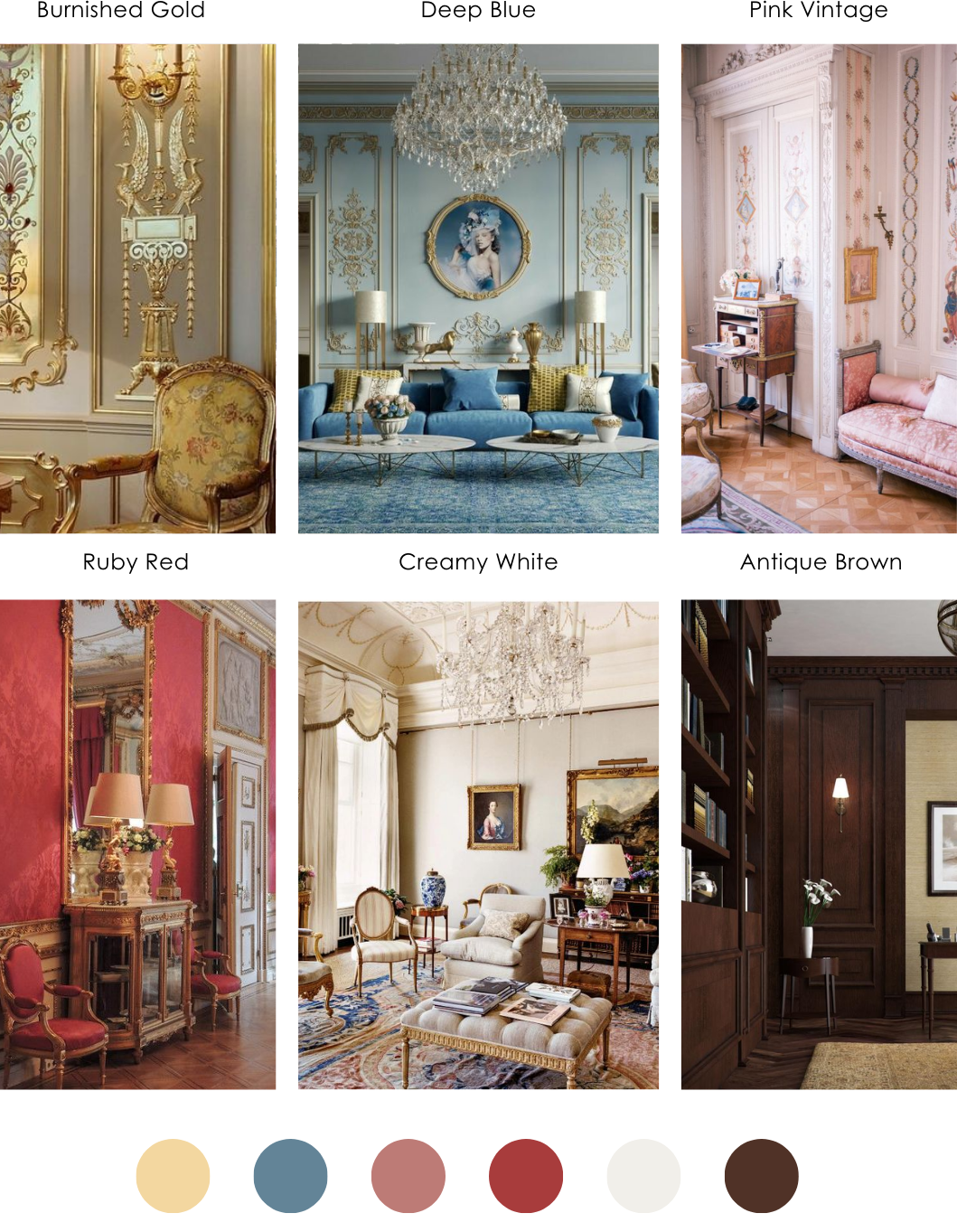
Combining with pastel colors contributes to creating a sense of grandeur for the room and is an ideal choice for decorating large surfaces.
A popular technique on furniture and decorative items is gold plating. It not only corresponds with any color but also enhances the color palette while adding visual interest.
.png)
Beautifully woven embroidered textiles are a common feature seen in living rooms, bedrooms, and other interior spaces in Renaissance-style decor. They encompass everything from elegant curtains to bedspreads and decorative pillows. For upholstery, luxurious fabrics like silk, velvet, and brocade draw attention. Windows are adorned with curtains featuring layers of thick silk as well as damask, velvet, and gold trim.
The Importance of Symmetry
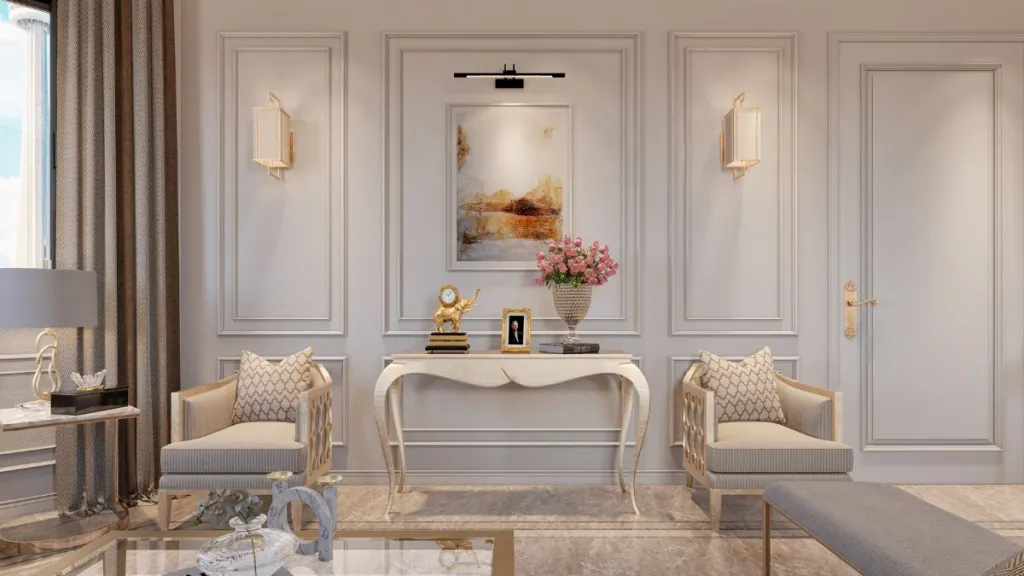
Renaissance style often employs symmetry in design as it brings balance and harmony to a space. Applying symmetry often involves reimagining and honoring classical cultural and artistic elements, where symmetry is seen as a symbol of perfection and tradition.
The layout of the living space focuses on symmetry. Each room has a focal point, with decor and furniture arranged symmetrically on both sides. This leads to the decoration of Renaissance-style rooms becoming harmonious as a unified entity.
4. Patterned Floors and Walls
Patterns can create impactful effects, making a room appear deeper and wider. Particularly, curved patterns can enhance the softness and gentleness of the space. Renaissance-style often references glorious historical periods, and the use of traditional patterns helps to recreate and connect with the cultural values of the past.
.png)
5. Choosing Appropriate Furniture:
Selecting furniture pieces with intricate patterns and elaborate forms, but using modern materials and advanced technology, creates a harmonious combination of tradition and modernity. For example, sofas can utilize premium fabric materials and incorporate Renaissance-inspired patterns, offering uniqueness and utility to the space.
In Renaissance style, dining tables often feature complex floral patterns and elaborate designs, yet they use high-quality wood materials and sturdy structures. The dining table can be designed long, suitable for large gatherings, or compact, fitting for limited spaces. Chairs may have classic silhouettes but use comfortable wood and cushioning, ensuring comfort while seated.
Wine cabinets and display shelves can be designed with Renaissance floral patterns but incorporate modern elements such as transparent glass, LED lights, and versatile shelves, creating a luxurious and convenient display space.
Artistic sculptures embellish wall niches, while other Renaissance-style decorations include small bronze statues, antique clocks, and framed mirrors.
.png)
One of the significant artistic breakthroughs of the Renaissance was the technique of perspective, which created depth and detail in paintings, offering a new perspective on space and depth. The perspective technique allowed artists to express space and depth more accurately, creating images that looked more realistic.
In interior design today, the perspective technique is applied in 3D graphic design software, which helps designers and clients better understand how the space will look when completed. This can aid in making accurate design decisions and ensuring that every aspect, from layout to decoration, is appropriate, creating an aesthetically pleasing and harmonious living space.
Therefore, the inspiration from the Renaissance is not just about recreating a historical period but also about generating new ideas and emotions, contributing to the richness and diversity of the contemporary art world.
Image source: Collected
The creative and powerful inspiration of the Renaissance is also transmitted into the spatial design that SENSEHOME CONCEPT aims for. Learn more about the project inspired by Renaissance design style at: